



Care & Use
Care for your Omega
Everything you need to know, by product.
Place your pan on medium heat for 2–3 minutes before adding anything. Titanium retains heat far better than stainless steel, medium is all you ever need, even for searing.
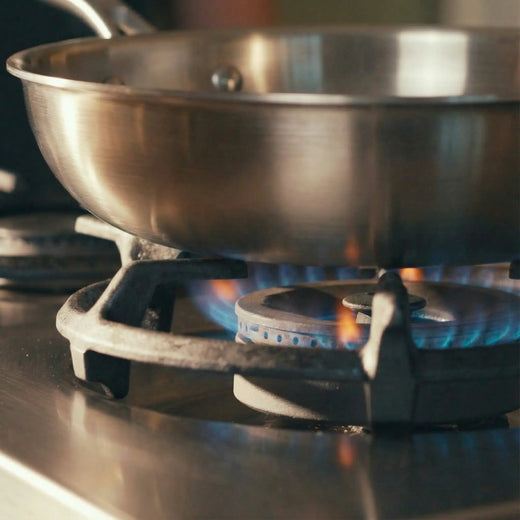
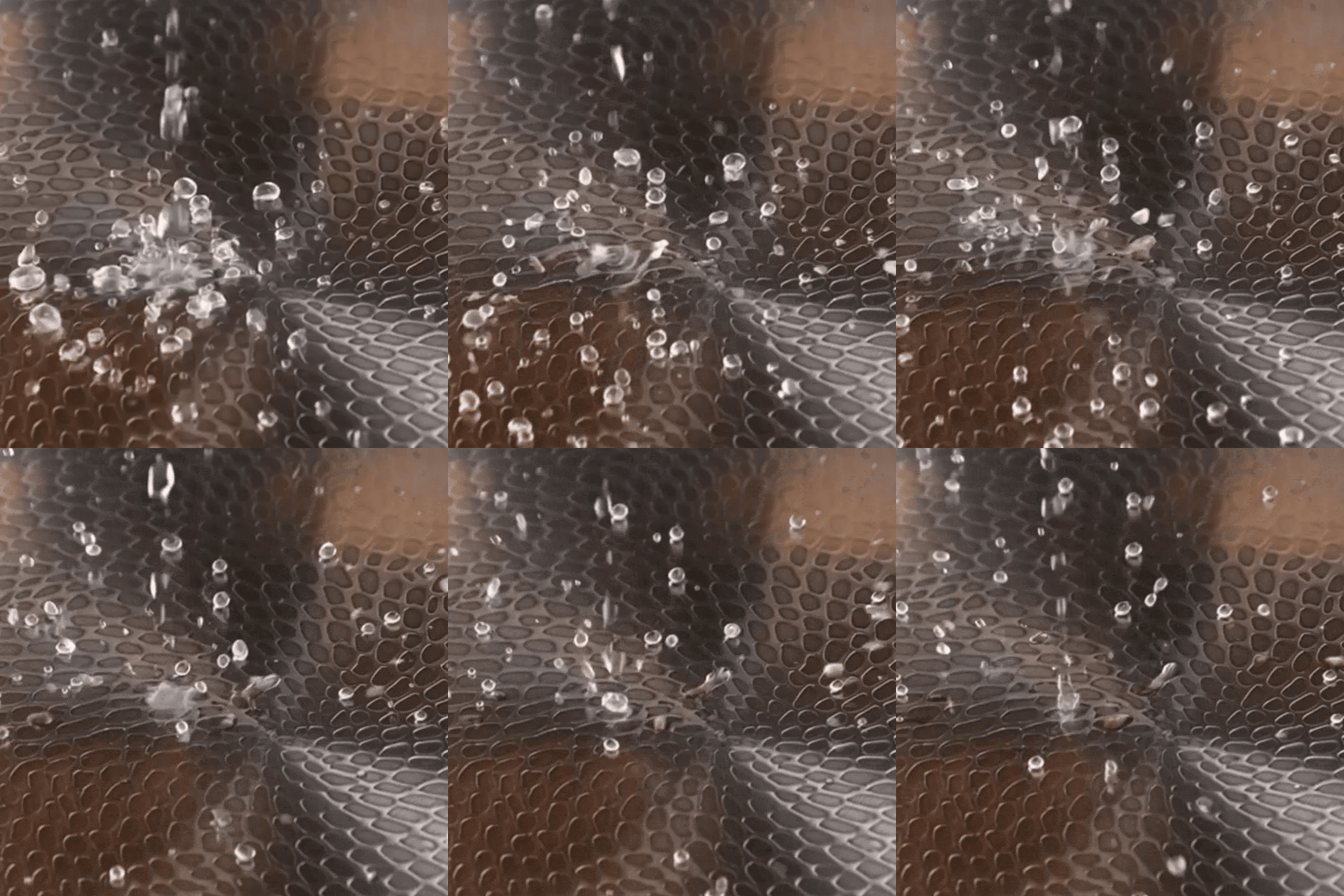
Once the pan is heated, sprinkle a small drop of water onto the surface. If the water evaporates instantly, the pan needs more time. If the drop forms a small ball that glides or dances across the pan, the pan has reached the ideal temperature and is ready for cooking.
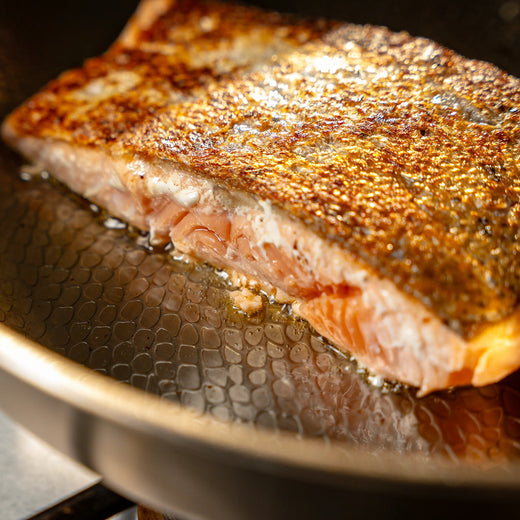
Lower the heat slightly, then add your oil or fat. Once the oil begins to shimmer, place your food in the pan. Let the food cook undisturbed. It may stick briefly at first, but once properly seared, it will release naturally without sticking.
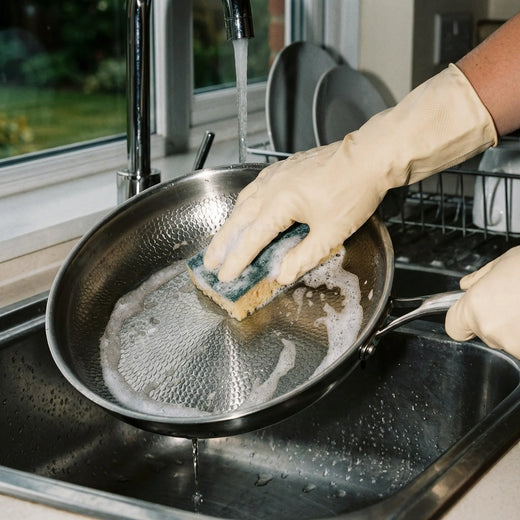
Let your pan cool down, then rinse with warm water and a soft sponge. Or put it in the dishwasher — titanium handles it perfectly.
Sticky brown residue? Make a paste of baking soda and water, apply to the surface, let it sit for 10 minutes, then wipe clean. The golden and rainbow tones underneath are the titanium patina — that stays, and it's what makes your pan more non-stick over time.
Simple rules
The do's and don'ts
Olive oil, avocado oil, butter, coconut oil, ghee, PAM — all work great
Medium heat + waterdrop test before cooking
If it sticks, give it 30 more seconds
Your titanium pan handles it perfectly
Titanium retains heat exceptionally, medium is all you need — even for searing
Food won't slide like a coated pan. Titanium needs preheat + oil + patience.
Always preheat first. Cold pan + food = sticking
If it sticks, it's not ready — give it 30 more seconds and it releases naturally
Oil guide
Oils, fats & sprays
Titanium works with everything. Here's how to get the best results.
All oils work with titanium
Titanium is compatible with every oil, butter, fat, and cooking spray. Use whatever you prefer.
How much to use
A thin coating is all you need. Add oil after preheating — not before. If your oil smokes, your heat is too high.
Your pan arrives in its natural bright silver state. This is pure, uncoated titanium — no seasoning required, no prep needed. Just wash it once with warm water and mild soap, and you're ready to cook.
After a few cooking sessions, you'll notice light golden or straw-coloured marks where heat hits the surface. This is titanium oxidation beginning — the exact same process used on aerospace components and medical implants. It's a sign your pan is working exactly as it should.
With regular use, the colours deepen into bronze, blue, and rainbow tones. The pattern is unique to your cooking habits — higher heat areas develop faster. The surface is also becoming more naturally non-stick as the oxide layer builds.
Your pan now has a deep, rich patina. The titanium oxide layer is fully developed, giving you the best non-stick performance the pan can offer. The surface remains 100% food-safe, non-toxic, and will continue performing for a lifetime.
Titanium oxide is the same process used in medical implants and aerospace. It does not affect food safety or cooking performance.
Let the pan cool slightly, rinse with warm water, wipe with a soft sponge.
Fill pan with warm water, let it soak 5 minutes, then use a soft sponge.
Fully dishwasher safe. Titanium handles it without any coating degradation.
Mix baking soda with water, apply to surface, let sit 10 minutes, rinse clean.
Questions
Frequently asked
Set your Omega Cutting Board on a clean, dry, and flat countertop. The weight of the titanium keeps it naturally stable. If your counter is smooth or slippery, place a damp towel or non-slip mat underneath for extra grip.

Unlike glass or ceramic boards, titanium minimises friction against your knife edge. Use your chef's knife, santoku, paring knife, or any blade — they'll stay sharper for longer.
From raw meat and fish to citrus, tomatoes, garlic, and onions, titanium is completely non-reactive. It won't absorb odours, stain, or react with acidic foods.

Your Omega board is designed to be used on both sides. The grooved side helps catch juices, while the smooth side works best for general chopping and slicing.
Simple rules
The do's and don'ts
Chef's knives, santoku, paring, serrated — even cleavers
Raw meat, fish, citrus, garlic, onions — titanium is non-reactive
After each use, a quick wash is all you need
Titanium is fully dishwasher safe, every time
Don't pound meat directly on the board — use plastic wrap between
They can leave surface marks — soft sponge only
Mild soap is all you need
It's a cutting board, not a pan
After a few uses, you'll notice fine lines on the surface from your knife. This is completely normal and expected. These marks are purely cosmetic and show that your board is doing its job.
Unlike plastic boards where grooves can trap food and bacteria, titanium remains non-porous and easy to clean. The marks stay shallow and do not affect hygiene.
Surface lines don't change the board's properties. Your knives will continue to glide smoothly and the board remains just as easy to clean.
Knife marks are purely cosmetic and do not affect food safety or performance.
After each use, simply rinse your board under warm running water. Most food residue slides right off the titanium surface.

Unlike wood or bamboo boards that warp and crack in the dishwasher, your Omega titanium board is fully dishwasher safe.
If you've been prepping something particularly pungent, make a simple paste of baking soda and water. Apply to the surface, let it sit for 5 minutes, then wipe clean.
Your Omega titanium board needs no regular oiling, conditioning, or special care. Just use it and clean it.
Questions
Frequently asked
Your Omega product is built to last
Following these care instructions ensures the best performance and is covered under our warranty.
Warranty Policy